

Diane Downs and the Hunger to Be Seen: When Motherhood Becomes a Stage
The image of Diane Downs that most people remember is the hospital doorframe, nurses rushing, stretchers blurring, and her standing there with a bandaged arm and a strangely composed expression. That moment became public property, the shorthand for “a mother without remorse.” But the thing about single snapshots is that they hide the quieter, stranger threads running underneath. They flatten people into monsters or martyrs, when often the truth is messier. Diane is a case where the edges reveal more than the center.
People assume the most shocking part of this story is that she shot her children. But if you sit with her life for a while, if you let yourself watch her the way investigators did, you start to see something more unsettling. There was a moment, long before the gunshot, when Diane slipped into a habit that would become the architecture of everything she later destroyed. She learned that if she cried loudly enough, someone might comfort her. If she posed as misunderstood, someone might choose her. If she hurt and did not get comfort, she would try bigger gestures.
What no one tells you is that narcissism does not start as ego. It starts as starvation.
As a teenager, she felt ordinary in a world where ordinary meant invisible. She was smart enough to understand that invisibility was a fate she could not tolerate. So she learned to bend stories, stretch moments, and turn suffering into something useful. If she was not cherished, she would at least be observed.
This becomes important later, because when you understand that attention replaced affection for her, the entire case reads differently.
Consider her pregnancy experiences. She famously described them almost theatrically. People congratulated her, fussed over her, watched her. Labor became a performance. Visitors became validation. For Diane, motherhood was not love, it was applause. It was proof she mattered.
But applause is temporary. Babies grow out of novelty. Diapers do not cheer for you. Toddlers do not admire your resilience. Children do not give standing ovations. And that is where her resentment began to leak through the cracks. She had children without the capacity to mother them, not because she was evil in that moment, but because she assumed the identity she built would be enough to carry her through it.
There is a moment that does not make the headlines but says more than all the court transcripts combined. After one of her children was paralyzed, Diane was supposedly observed asking whether he was “really trying his best” in therapy. Not out of concern for improvement, but because she could not stand the image of having a child who did not feed her need for triumph. In her eyes, even a paralyzed child existed to reflect well on her.
That tiny, chilling detail tells you everything.
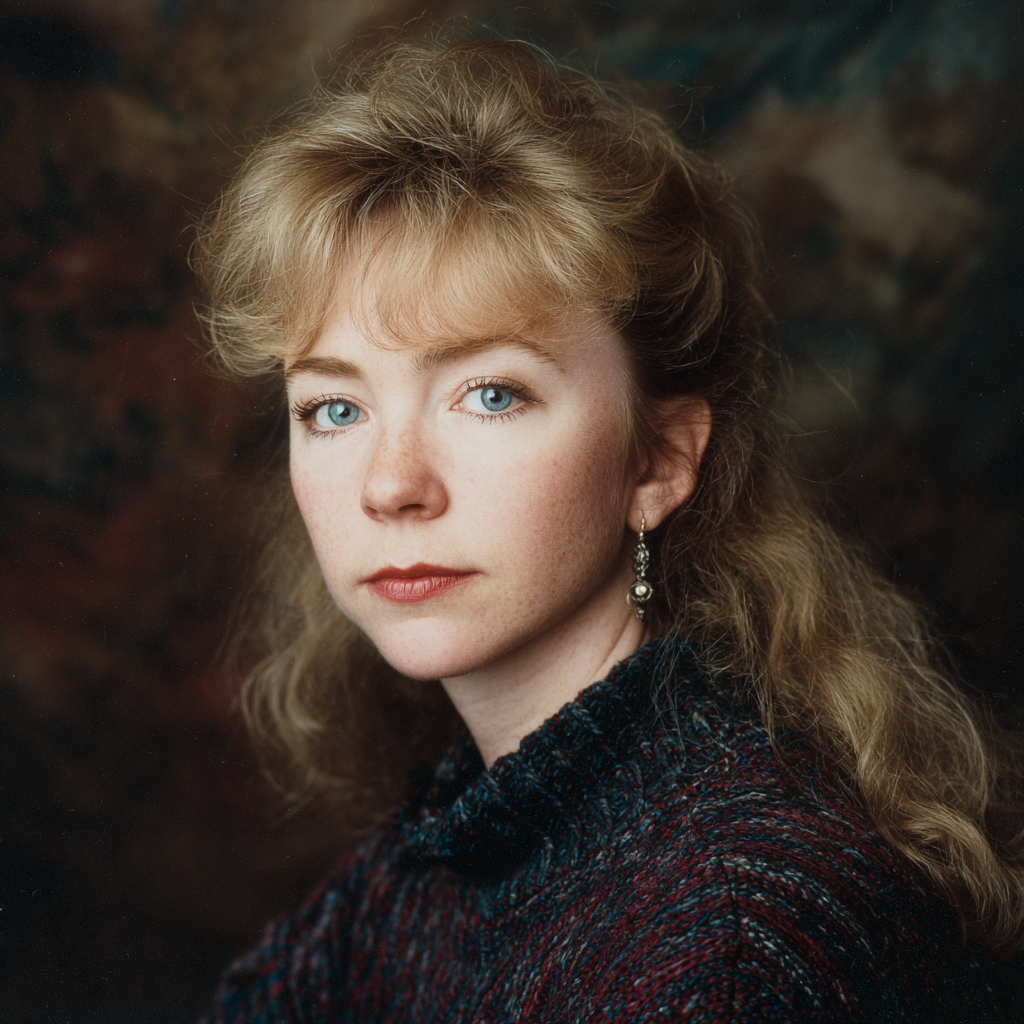
Image Credit: Midjourney AI
It is easy to say Diane Downs killed for a man. But that oversimplifies her. She killed for a fantasy. The man was just a prop that belonged inside it. Her affair was not about love, it was about narrative. He did not want kids. Diane wanted his attention more than she wanted their existence. In her internal story, she was the woman sacrificing everything for passion. She was tragedy incarnate.
What most people miss is how much Diane actually wanted to be the epicenter of sympathy.
There are archived interviews where she talked about being shot in the arm with a bizarre pride. She described the blood, the pain, the shock, not as trauma, but as something dramatic and beautiful in her mind. Diane loved being the woman who survived gunfire. If she could have written it herself, the world would have recognized her as the miraculous survivor mother. Except the script had a problem, she wrote it backwards.
Hop into her psychology for a second. Imagine the moment inside that car, with her children still breathing. This was not an eruption. It was not a blackout. It was planning colliding with reality. She expected something afterward, attention or reconciliation or heroism. Instead, she had to confront the fact that her children were dying because of her. The truth is, she did not have the emotional range to process that. So she edited the story instantly.
That is why the lie was ready so quickly.
A stranger did it.
A man on the road.
A carjacking gone wrong.
People forget this, but Diane did not just try to avoid responsibility. She tried to make herself the centerpiece. The brave mother who drove bleeding children through the night to save them.
It is grim, but you have to admire the speed at which her mind rewrote the script.
And here is the detail that gets lost. Neurologically and emotionally, she reacted the way a person reacts to ruining their hair before a date, annoyance mixed with mild irritation that life was not giving her the admiration she expected. That is the terrifying part. It was not malice in the cinematic sense. It was entitlement and delusion and an inability to comprehend that children were separate from her storyline.
If you listen closely during her trial footage, she laughs at her own testimony. She flirts with male interviewers. She talks about bullet wounds with the excitement of someone recounting a highlight reel. She is not a woman grieving. She is a woman fascinated by her own drama.
Diane Downs is a reminder that not all killers are fueled by rage or hatred. Some are fueled by vacancy, an absence where empathy should be. They do not destroy life because they despise it. They destroy it because they never truly saw it as real in the first place.
People still search for the meaning in her crime. Was she mentally ill? Evil? Broken? Manipulative? The answer is yes to all of them, but maybe in smaller, quieter ways than we want. Diane Downs did not just hurt her children. She erased their personhood long before she pulled the trigger. Their lives were never more than scenery in her movie.
And the most haunting thing is this. Even today, she still casts herself as misunderstood. The story continues for her. The audience just stopped applauding.
Understanding Diane is uncomfortable because it forces us to confront a truth people prefer not to speak about. The most dangerous type of mother is not the one who screams, but the one who believes she is the protagonist of everyone’s life story. Once you see that pattern, in true crime and sometimes in real life, you cannot unsee it.
That is why her case lingers. Not because of the violence, but because of what it exposes about the fragile border between love and ownership. Some people do not want children to love, they want children to prove something.
And when proof stops performing, stories like this begin.
If You Loved This, You’ll Love These Too:


Have You Heard The Latest Episode of GBRLIFE of Crimes?
GBRLIFE has so much more: