Hey CEO’s… AI Is Coming for You Too
For decades, CEOs have been the ones confidently predicting the “future of work.” They stand on stages at tech conferences and earnings calls, painting automation as the logical next step in business evolution. They praise artificial intelligence for streamlining operations, improving productivity, and reducing “unnecessary” labor costs. Behind closed doors, they sign off on layoffs that ripple through families and communities, justifying it as strategy, not cruelty. In their world, progress means fewer humans.
It’s always about replacing employees. Never about replacing themselves.
The myth of the irreplaceable CEO has lived comfortably in corner offices for a long time. After all, executives are taught to believe they are the visionaries...the unique minds capable of steering massive organizations through storms. They tell themselves their jobs are too nuanced, too relational, too dependent on “gut instinct” to ever be threatened by technology. Workers on the factory floor, customer service reps, even entire departments might be automated away...but not the person at the very top.
But here’s the inconvenient truth: you’re human too. And in the cold math of automation, human is just another word for replaceable.
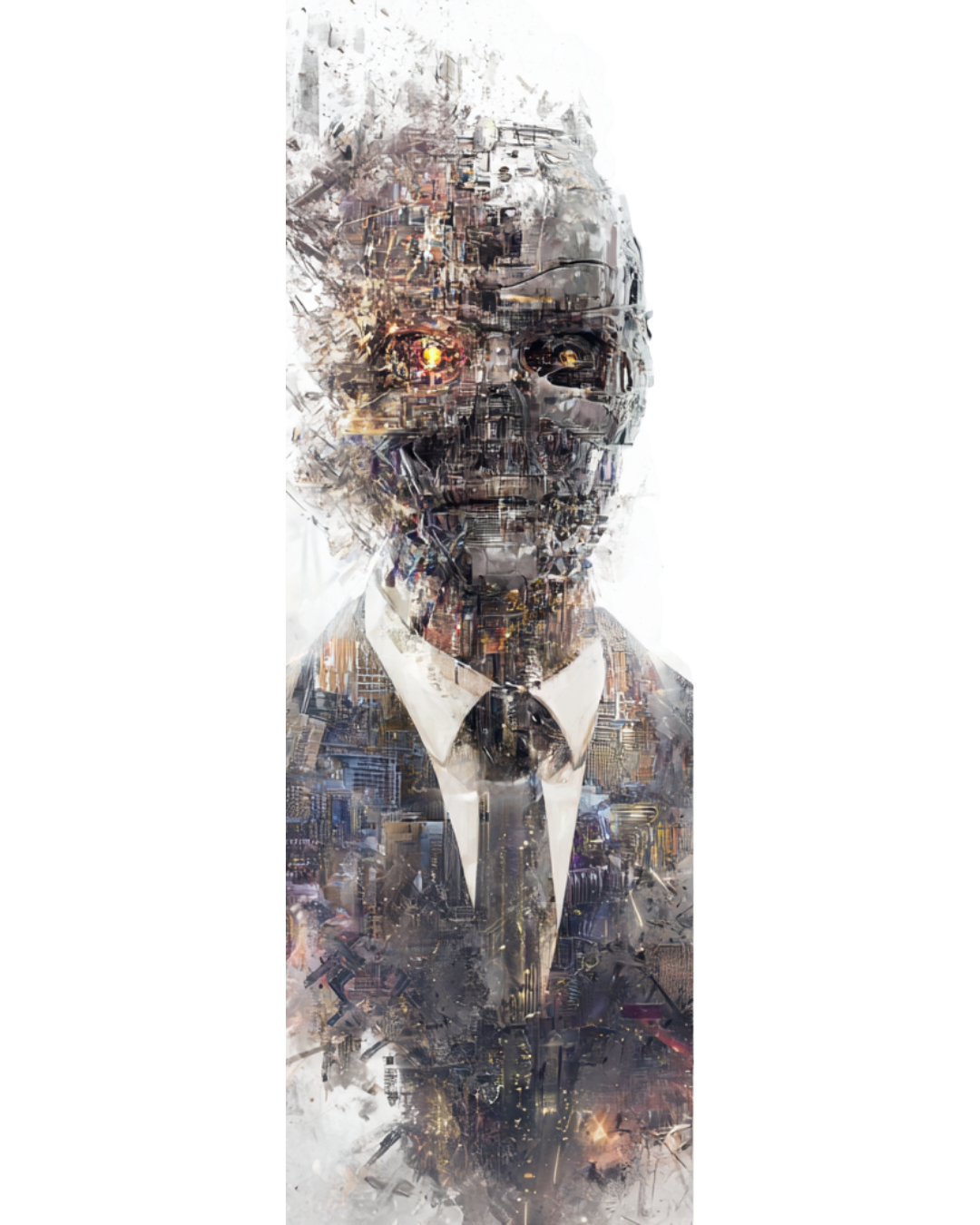
Image Credit: Midjourney AI
This is the blind spot at the top. While CEOs spend hours in meetings discussing which teams or roles can be “optimized,” they forget that the exact same questions can be...and will be...asked about them. Why does a company need to pay $20 million a year for a leader who can’t process a fraction of the information AI can? Why stick with a flesh-and-blood CEO who needs time to deliberate, who sometimes makes decisions out of ego or fear, who can’t possibly calculate every variable in real time?
Boards are already quietly experimenting with these questions. Algorithms have been managing stock portfolios for years, executing trades based not on “instinct” but on complex models that no human could replicate at scale. Some decentralized organizations are governed almost entirely by code, with leadership functions executed through programmed consensus rather than charismatic personalities. If that can be done with money and governance...two of the most sensitive pillars of corporate life...why not with executive decision-making?
The uncomfortable answer is that it can be done.
Think about how quickly AI can work compared to you. While you schedule a three-day offsite to discuss “strategic priorities,” an AI system can analyze competitor activity, run market simulations, and generate three viable plans with projected outcomes before lunch. While you rely on teams of analysts to prepare carefully curated decks, AI can consume raw global data, identify subtle patterns invisible to the human eye, and suggest bold moves with probability scores attached. And unlike you, AI doesn’t protect its ego, cling to legacy decisions, or play politics with the board.
The appeal of this to shareholders is obvious. An AI “CEO” doesn’t need a seven-figure salary, stock options, or a golden parachute. It doesn’t take vacations. It doesn’t get embroiled in scandals. It doesn’t burn out, snap at subordinates, or carry grudges. It simply produces output. To investors trained to measure everything in efficiency, the argument for replacing you is almost too easy.
And that’s where the irony becomes deliciously sharp. The very leaders who once told their workforces “this is the future, nothing personal” are now staring down the same impersonal logic. For years, AI was positioned as a tool executives wielded against rising costs and restless labor. But AI doesn’t work for you...it works for the data. And if the data points toward higher returns without your nameplate on the office door, the machine won’t hesitate to write your exit plan.
It’s worth asking: what truly sets a human CEO apart anymore? Many like to believe it’s vision, or charisma, or experience. But even those qualities are being replicated at alarming speed. AI can generate persuasive speeches tailored to different audiences. It can remix decades of business strategies into convincing “visions” for the future. It can model multiple leadership styles...from bold risk-taker to cautious stabilizer...and predict which would resonate most with stakeholders. If leadership can be simulated convincingly, what’s left of the argument that you’re irreplaceable?
The truth is, you’re not. Not by default, anyway.
The only thing standing between you and obsolescence is your humanity...and whether that humanity actually adds value. Do your employees trust you in a way they could never trust a program? Do you inspire loyalty when things are uncertain? Do you bring cultural intuition that algorithms can’t yet fully mimic? These are the fragile threads you have left. And they are far weaker than most CEOs want to admit.
Look at how easily workers were dismissed when automation began sweeping through industries. Factory jobs, retail roles, customer service positions...one by one, they were labeled inefficient, redundant, outdated. Each cut was explained with the same tired line: “This isn’t about people, it’s about business.” Now imagine that line written about you. Because if an AI-led company can cut costs, eliminate executive bloat, and still deliver shareholder value, the board will say exactly that. It won’t be about you. It will be about business.
That’s the future you’ve helped create.
Of course, there’s still room for choice. CEOs who survive the coming shift won’t be the ones who cling to denial. They’ll be the ones who integrate AI into their leadership, not as competition but as a co-pilot. They’ll use it to sharpen their vision, to spot risks they’d never see alone, to challenge their own blind spots. They’ll lead with authenticity and empathy...things that remain hard to fake. And they’ll recognize that the one currency machines can’t yet trade in is trust.
But here’s the bottom line: AI isn’t waiting politely outside your office. It’s already in the board meeting, running the numbers, drafting the strategies, and calculating the ROI of replacing you. And when the day comes, it won’t knock. It will arrive as a line item in a budget presentation, a recommendation backed by hard data, a cold conclusion that the board simply can’t ignore.
You’ve spent years reminding your workforce that “no one is safe” from disruption. You just forgot that “no one” includes you.
So ask yourself: are you truly irreplaceable, or just another expensive human waiting to be optimized away?
If You Loved This, You’ll Love These Too:




Have You Heard The Latest Episode of GBRLIFE of Crimes?
GBRLIFE has so much more: