

Then and Now: How the World of Jesus Speaks to Today’s Divisions
Two thousand years ago, the hills of Galilee and the stone streets of Jerusalem pulsed with tension. Rome’s eagle banners flew over every gate, a reminder that the empire taxed the poor until many were one bad harvest from ruin. Local rulers and Temple authorities guarded their positions like a crown, layering new rules on top of old ones to prove who was pure enough, holy enough, worthy enough to belong. Ordinary families felt the pressure in every corner of life. What you ate, how you worked, who you touched, when you prayed…each detail could draw scrutiny. Break the code and you might be shamed, excluded from the synagogue, or quietly pushed to the edges where survival was hard and dignity even harder. It was a society where belonging meant everything, and fear of being cast out kept people compliant.
Into that atmosphere walked Jesus of Nazareth. He wasn’t born to privilege. He grew up in a small town, learned a trade, and lived under the same imperial taxes as everyone else. Yet the way he moved through that world startled people. He healed on the Sabbath even when the law said rest. He sat at tables with tax collectors and prostitutes and treated them as friends. He touched lepers when custom said even a brush of a sleeve made you unclean. He looked religious experts in the eye and said, “The Sabbath was made for people, not people for the Sabbath.” Over and over, his actions and his words cut through the thick wall of rules to reveal a deeper truth: love matters more than control.
“Love your neighbor as yourself.”
“Do to others as you would have them do to you.”
“Let the one without sin cast the first stone.”
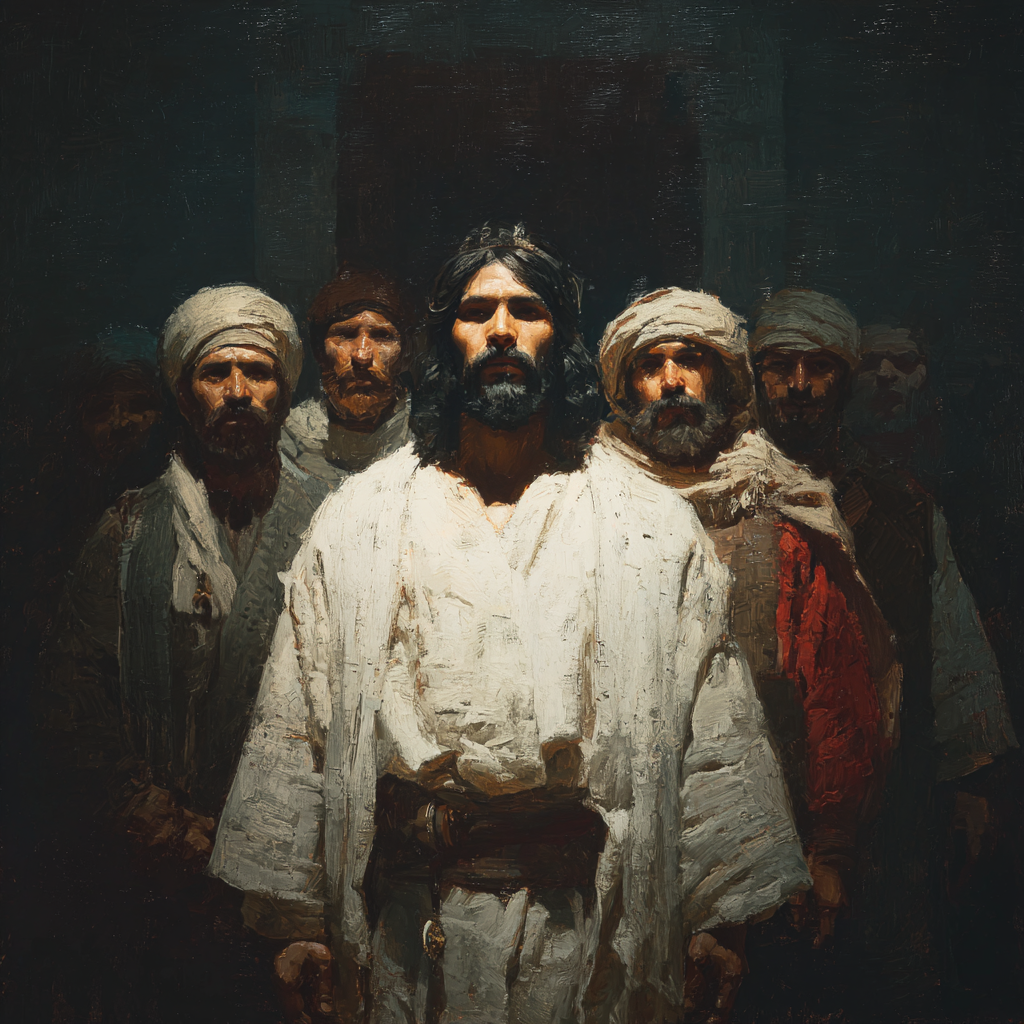
Image Credit: Midjourney AI
These were not slogans for a greeting card. They were a direct challenge to a culture that used religion as a weapon. Jesus was not soft on justice; he confronted hypocrisy with courage.
He refused to let faith become an excuse for cruelty.
His message threatened both empire and establishment because it loosened their grip. If compassion outranks ritual, if forgiveness is stronger than fear, then neither Rome nor the local elites hold ultimate power.
Image Credit: Midjourney AI
When we step back and look at our own moment, it is hard not to notice the rhyme of history. We do not live under Caesar, but we know the feeling of a society fracturing into camps. Costs climb, tempers flare, and people sort themselves into tribes defined by politics, race, or belief. Social media rewards outrage; neighbors size each other up by yard signs or hashtags. Leaders, religious and political alike, sometimes find it easier to rally followers by naming an enemy than by seeking common ground. The details are modern, but the mood can feel hauntingly familiar: fear of losing control, fear of the other, fear that if we do not draw hard lines we will disappear.
And once again, the name of Jesus is being pulled into the fight. Some use it to defend policies that push people away or to justify contempt for those who see the world differently. Yet the Jesus we meet in the Gospels does not give anyone permission to weaponize his name. He never said “drive them out,” “make them pay,” or “banish those who disagree.” He said, feed the hungry. Welcome the stranger. Forgive seventy times seven. Love your enemies and pray for those who hurt you. That is not sentimental language; it is a radical way of life that unsettled his own time and unsettles ours if we take it seriously.
Remembering that can help us see our present moment more clearly. Banning books, denying healthcare, or cheering for violence against people we dislike does not make us less like the world Jesus entered. It makes us more like it.
The point of his ministry was not to endorse the gatekeeping of his day but to break it open.
He came to show that God’s love is bigger than our fear and that dignity does not belong to a single group.
The question is whether we will follow that example or repeat the cycle he came to interrupt.
History does not repeat itself exactly, but it does rhyme.
The same invitation that echoed across Galilee still stands: to love one another, to refuse the easy comfort of hatred, to hold conviction without cruelty. Every time we choose empathy over contempt, we step into that invitation. Every time we refuse to treat neighbors as enemies, we remember what Jesus came to remind the world of.
And in that choice…quiet, stubborn, hopeful…we become the kind of people who can change the story.
If You Loved This, You’ll Love These Too:


Have You Heard The Latest Episode of GBRLIFE of Crimes?
GBRLIFE has so much more: